

2012 Sea-Doo Challenger Wake Screen Delaminating? Here's What's Happening (and Why Restoration Is the Only Path Left)
The 6.5" Medallion Viper 1 touchscreen on 2012 Sea-Doo Challenger Wake boats is delaminating across the fleet — and the OEM part (PN 278002612) is no longer available from BRP dealers. Restoration is now the only path forward. Here's exactly what's happening, why the dealer can't help, and how the mail-in repair works ($2,000 vs $4,000+ dealer pricing when units were still available).

2012 Sea-Doo Challenger Wake Screen Delaminating? Here's What's Happening (and Why Restoration Is the Only Path Left)
The 6.5″ Medallion Viper 1 touchscreen on 2012 Sea-Doo Challenger Wake boats has been delaminating across the fleet. Here's the catch: BRP no longer supplies the original part (PN 278002612) to Sea-Doo dealers. There is no factory replacement available. Restoring your existing display is now the only way forward — and the good news is it's faster, cheaper, and uses better components than the original.

A 2012 Sea-Doo Challenger Wake helm display showing the classic Viper 1 delamination — the optical bond between the glass and LCD breaking down after a decade of marine UV and heat exposure.
What Is the Sea-Doo Challenger Display?
The 6.5″ Medallion Viper 1 touchscreen
The 2012 Sea-Doo Challenger Wake 210 and 230 use a 6.5″ Medallion Viper 1 touchscreen at the helm. It's the same physical hardware platform used on 2012–2013 Mastercraft X-Series boats and Chaparral Vortex/SSi models from the same era — just with Sea-Doo-specific cosmetics, software, and the integration into BRP's iControl helm system.
The Viper 1 was Medallion's first-generation optically bonded marine touchscreen. It runs the full Sea-Doo helm interface: speed, fuel, engine data, audio, lighting, and the iControl options screens. When the screen fails, you lose access to almost every electronic control on the boat — not just the display, but the helm.
Compatible Part Numbers (Medallion Viper 1)
Fits 2012 Sea-Doo Challenger Wake 210 and Challenger Wake 230 sport boats — plus 2012–2013 Mastercraft X-Series (X2, X10, X20, X30, X45) and 2011–2013 Chaparral Vortex/SSi/H2O sport boats running the same Medallion platform.
The 4 Most Common Failures
What goes wrong on Sea-Doo Viper 1 displays
The Viper 1 on a 2012 Sea-Doo Challenger Wake is now 13+ years old in the field. Delamination is almost always the first sign — and once the seal starts to fail, the other symptoms follow in sequence.
🌊 Delamination
The cloudy bubble pattern most owners notice first. The optical adhesive between the LCD and the glass starts separating — usually beginning at one corner and spreading across the panel over time.
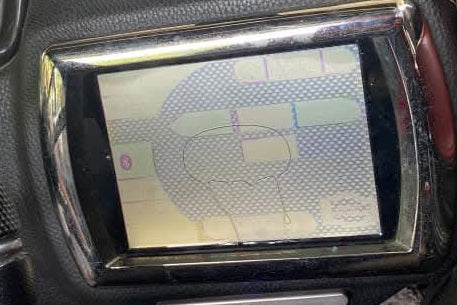
🌓 Dim or Dark Backlight
The original LCD backlight loses output over a decade+ of use. The screen becomes hard to read in direct sun, then progressively dimmer until it can be black entirely. Our replacement uses a brighter, modern LED.
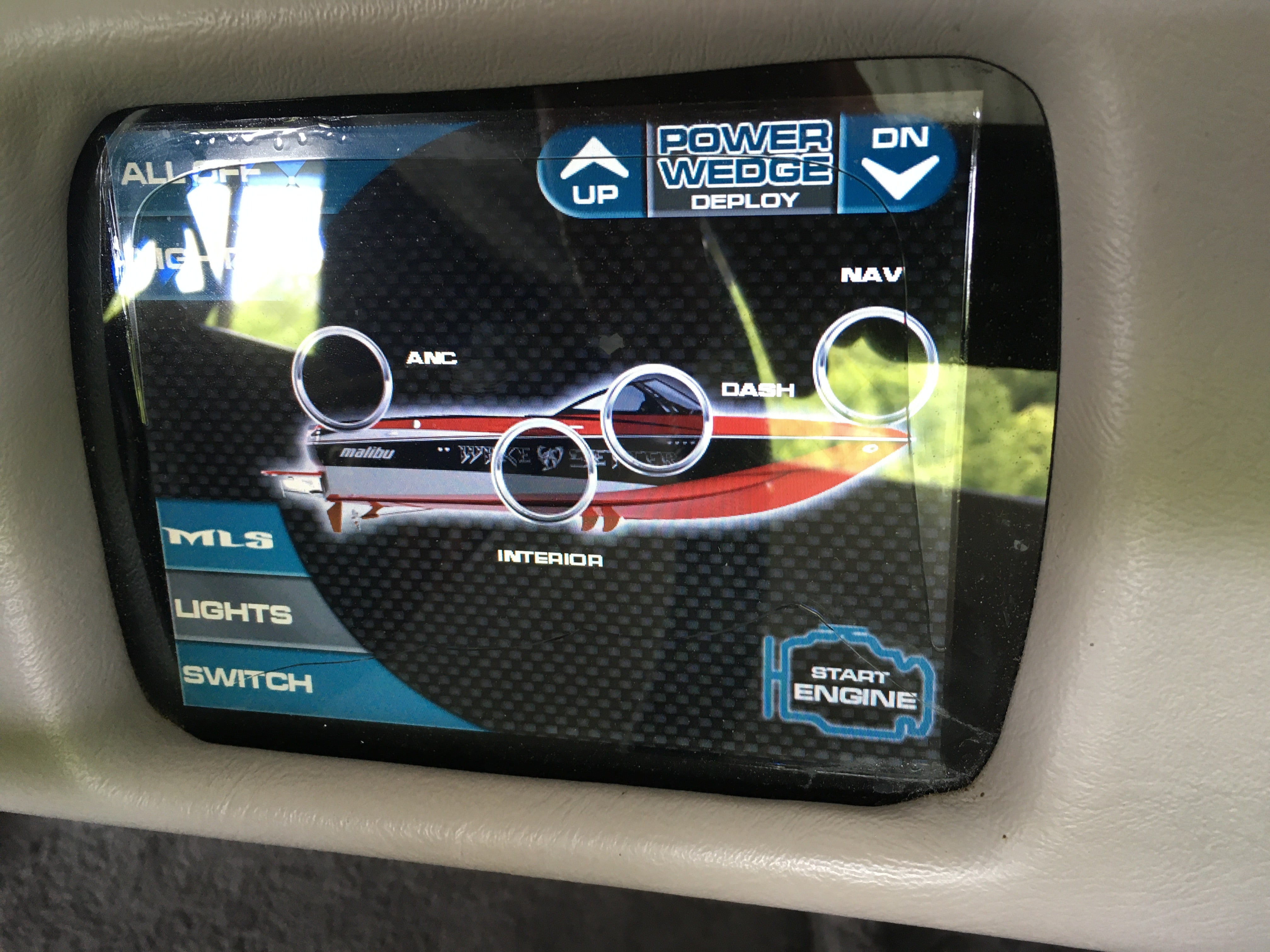
⏱ Frozen or Unresponsive Touch
Buttons stop registering, zones go dead, or taps land off-target. As the adhesive separates, it pulls the digitizer out of alignment with the LCD — the touch input no longer matches what you see on screen.
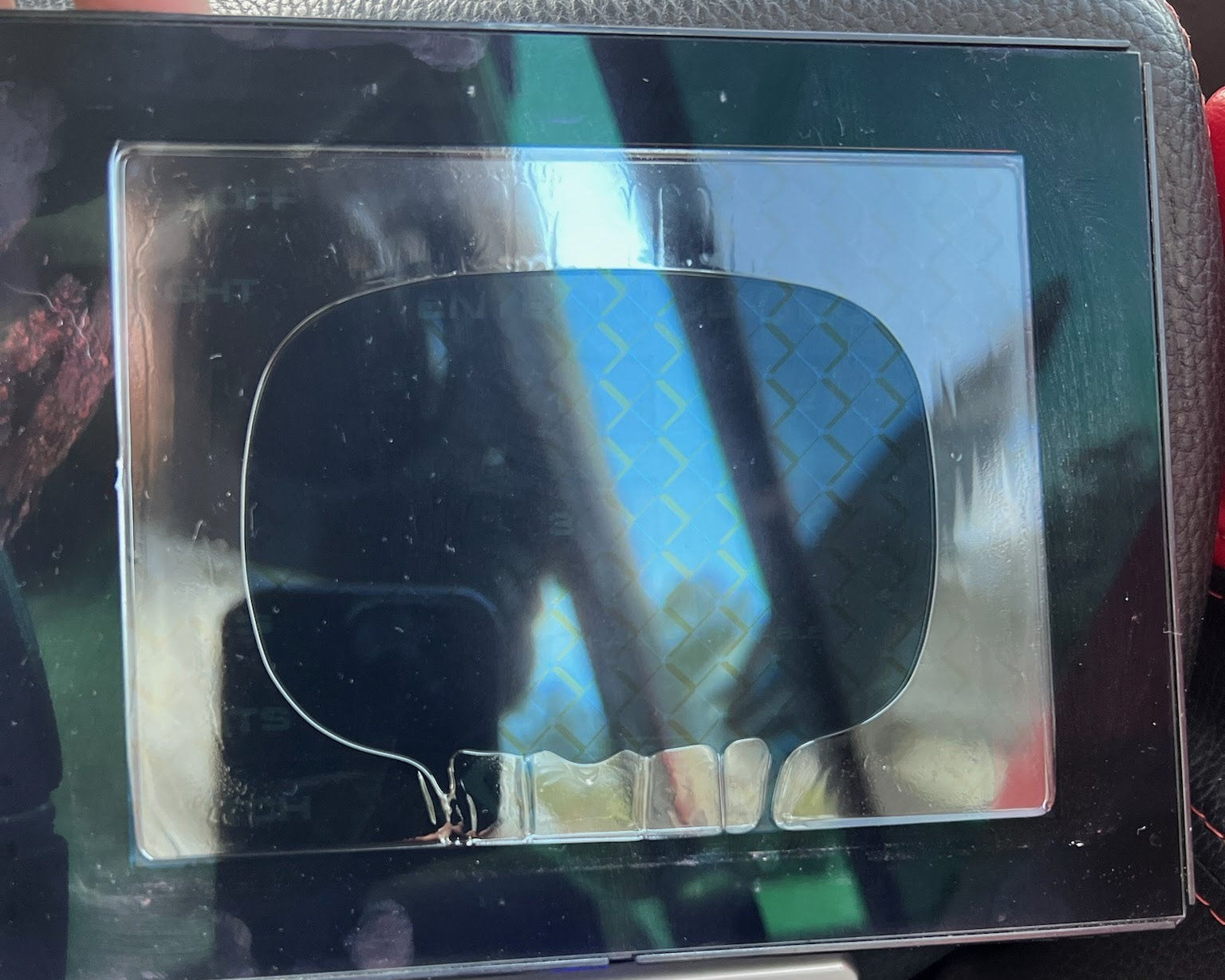
🔴 Ghost Touch & LCD Defects
Phantom presses, vertical stripes, random color bars, backlight bleed. Moisture entering through the delaminated seal accelerates this once it starts — particularly common on Sea-Doo boats stored uncovered.
🎦 Real Sea-Doo Challenger Repair
A walkthrough of a Sea-Doo Challenger Wake Viper 1 display showing the classic delamination pattern, along with what the restored unit looks like coming back.
Why This Happens on Sea-Doo Challenger Boats
The real cause — not user error
The Viper 1 was a first-generation optically bonded marine display. Medallion's bonding process at the time wasn't engineered for what a Sea-Doo Challenger helm faces over a decade of seasonal use. Four forces work against the original bond:
- Direct UV exposure — the Challenger's helm is mostly open to the sky, with limited shade from the bimini. The Viper 1's cover glass filters some UV but not all of it. Over a decade+ of seasons, the polymer chains in the optical adhesive break down. The bond becomes less elastic, less tacky, and less able to maintain its grip on the LCD.
- Heat cycling — a Challenger that bakes in 90°F sun all day and gets stored cool at night goes through dozens of thermal cycles every season. The materials in the display expand and contract at different rates. Over 13+ years, voids form at the bond line.
- Hull vibration — the Challenger Wake's sport jet propulsion transmits considerable vibration through the hull. Persistent vibration accelerates the formation of micro-voids in adhesive that's already weakened by heat and UV.
- Marine humidity and moisture intrusion — once a gap forms at the edge, moisture has a path inward. That accelerates delamination spread and starts damaging the LCD backlight and touch controller.
How to Remove the Display
Front-removable from the Challenger helm — no specialty tools
The Viper 1 on a 2012 Sea-Doo Challenger Wake comes out of the dash from the front as a complete unit with its bezel attached. Standard hand tools, about 15–20 minutes of work.
- 1Disconnect the boat's battery before any work at the helm. Pull the negative terminal to prevent any inrush to the iControl data network.
- 2Access the back of the dash and locate the mounting fasteners for the display housing. The Viper 1 is typically mounted with four screws on the rear face.
- 3Remove the mounting fasteners with a standard socket. Hardware reuses on installation, so set it aside.
- 4Disconnect the wiring harness from the back of the display. The Viper 1 has a single multi-pin connector for the iControl bus and a power feed.
- 5The display slides forward out of the dash with its bezel attached. Pack as a complete unit for shipping. No need to disassemble further.
Real Customer Result
2012 Sea-Doo Challenger Wake 210 — full restoration
A 2012 Sea-Doo Challenger Wake 210 owner reached out after BRP told him the original 278002612 display was no longer available, full stop. The screen was fully delaminated, the lower-right corner was dark, and touch response was inconsistent across the panel. With no dealer path forward, restoration was the only option. He shipped the unit in, and we returned it within 3 business days with a fully rebonded display, brighter LED backlight, and the upgraded touch sensor installed.
Why the Restored Display Outlasts OEM
What we upgrade during the rebuild
The restored display isn't just a re-bonded version of what failed — we rebuild it with components engineered to outlast the original Viper 1 design. Every MTC-6B restoration includes:
How to Restore Yours
Mail-in restoration service — 3-day turnaround
Because the Sea-Doo Viper 1 rebuild requires custom optical re-bonding with the upgraded adhesive, it's not feasible to ship as a DIY kit. We do the rebuild in-shop and return the restored unit ready to plug in.

MTC-6B Service
Ship with a pre-paid label. We rebuild the optical bond, install a brighter LED, test, and return within 3 business days. From $2,000. Pay after repair.
Order MTC-6B Restoration →
Free Diagnostic
Send us a photo of your screen and your year/model. We'll confirm the display is Viper 1 and the right restoration path. No commitment.
Start a Chat →
Same Fitment
Same restoration also fits 2012–2013 Mastercraft X-Series (5008150/5008151) and 2011–2013 Chaparral Vortex (15.00250/15.00242). Identical platform, identical fix.
View Fitment List →Ready to restore your helm?
When the Dealer Can't, We Can
Mail in your 2012 Sea-Doo Challenger Wake Viper 1 display. Back in 3 business days with upgraded bonding, brighter LED, and all your iControl settings preserved. Pay after the work is done.
Order MTC-6B Restoration →